
Tag Archives: medicinal plants

The Art of Cleansing: Wise Protocols for Detoxifying Herbs

In a culture that prizes instant results and quick fixes, the word “detox” is often thrown around casually—splashed across juice bottles, social media feeds, and fad diets. But true cleansing is not a one-size-fits-all event or a daily routine. Instead, it’s an ancient practice rooted in respect for the body’s rhythms, the changing seasons, and the careful use of potent herbal allies.

Detoxifying Herbs: Powerful, but Not for Everyday Use

Certain herbs have long been trusted to support the body’s natural elimination pathways—helping us clear stagnation, shed what no longer serves, and return to lightness and vitality. Plants like zarzaparrilla (Smilax spp.), burdock root (Arctium lappa), dandelion root (Taraxacum officinale), and yellow dock (Rumex crispus) have earned their place in herbal traditions worldwide for their gentle but effective support of the liver, kidneys, and lymphatic system.

But here’s the truth: these herbs are powerful, and they are not meant for continuous or casual use. Just as the earth moves through cycles of abundance and rest, so too should our bodies. The wise use of detoxifying herbs is best approached as part of a seasonal or periodic protocol—something we do with intention, guidance, and care, rather than as a daily habit.

Cleansing Protocols: Nutrition and Rest as Essential Partners

A true herbal cleanse is more than just taking a few capsules or brewing a strong tea. It invites you to slow down, listen to your body, and support the process with nourishing foods, ample hydration, and gentle movement. Eating fresh, whole foods—especially leafy greens, seasonal fruits, and fiber-rich vegetables—gives the body the building blocks it needs to eliminate toxins efficiently. Adequate rest and stress reduction are just as crucial; the body’s detox pathways work best when we’re in a state of balance.

Working with an herbalist or holistic practitioner can help you tailor a protocol to your constitution, health history, and goals. Together, you can determine when to introduce herbs like zarzaparrilla, milk thistle (Silybum marianum), or red clover (Trifolium pratense), how long to use them, and what supportive practices to include to make the most of your cleanse.

Understanding the Detox Path: Which Filter Organs Do You Target?

 
Before beginning any cleansing protocol, it’s important to understand which organs and systems you’re supporting. Our bodies have several remarkable filters, each with a unique role in detoxification. The liver is the primary organ that processes and neutralizes toxins, making it a central focus of most cleansing plans. The kidneys filter waste from the blood and maintain fluid and electrolyte balance, while the skin—the largest organ—eliminates toxins through sweat. The lymphatic system acts as a drainage network, carrying away cellular debris and supporting immune function, and the digestive tract (especially the colon) plays a crucial role in moving waste out of the body.
 
Depending on the herbs you choose, your cleanse may gently stimulate one or more of these pathways. For example, zarzaparrilla and burdock root are classic choices for supporting liver and skin, while dandelion and nettle can help the kidneys flush out accumulated waste. Understanding these pathways helps you select the right herbs, foods, and supportive practices for your unique needs, making your cleanse safer and more effective.
 

The Beauty of Seasonal and Cyclic Cleansing

In many traditional cultures, cleansing is woven into the fabric of the year—often practiced in spring, after the heaviness of winter, or in autumn, as we prepare for the quieter months ahead. This cyclical approach honors the natural ebb and flow of energy and gives the body time to replenish between phases of deep elimination.

By embracing this rhythm, we avoid the pitfalls of depletion and instead cultivate renewal, clarity, and groundedness. Detoxifying herbs become trusted companions on the path, not crutches or quick fixes, but wise elders reminding us of the importance of balance, rest, and right timing.

A Gentle Reminder

As tempting as it may be to seek the next miracle cleanse, remember that your body already has remarkable systems for detoxification. Herbs like zarzaparrilla, burdock, and dandelion can offer gentle support, but they work best when you honor them as part of a thoughtful protocol—one that includes nutrition, rest, mineral intake, and respect for your own unique needs.
If you’d like a personal consultation about cleansing protocols or herbal support, feel free to contact me at my ONLINE CLINIC. I’m here to help you find the right path for your unique needs.

Nootropics: Herbal Allies for Mental Clarity

In a world that moves with the restless energy of a thousand thoughts per minute, it’s no wonder so many of us seek clarity, focus, and calm. We reach for coffee, adaptogens, meditation apps—anything to help us think more clearly, remember more easily, and feel more present. Somewhere in this modern maze, ancient wisdom quietly awaits, offering a different kind of support: the gentle, profound nourishment of nootropic herbs.

The Heart of Nootropics: More Than a Buzzword

Nootropics—a word that conjures images of high-tech brain hacks—simply means substances that support cognitive function. But for herbalists, nootropics aren’t shortcuts or quick fixes. They are living allies, with histories rooted in traditional medicine, offering their gifts in partnership with our bodies and minds.

Unlike synthetic stimulants, herbal nootropics tend to work gradually, coaxing our nervous system toward balance, resilience, and clarity. They remind us that the brain is not a machine to be optimized, but a living part of a whole—an ecosystem of memory, emotion, intuition, and reason.

Lion’s Mane: The Mushroom for Mind and Mood

Lion’s Mane (Hericium erinaceus) is a marvel of the fungal world—its cascading, white tendrils resembling a mane of flowing hair. Revered in East Asian traditions, this mushroom has a growing reputation for supporting memory, concentration, and nerve health. Scientific research now echoes ancient intuition: Lion’s Mane contains compounds that may promote nerve growth factor (NGF) production, a protein vital for the growth and maintenance of neurons.

But Lion’s Mane is more than a “brain booster.” Many herbalists and mushroom enthusiasts find it brings gentle clarity, softening mental fog while also offering comfort to the heart. It reminds us that cognitive health is intertwined with emotional well-being.

Gotu Kola: The Herb of Longevity and Focus

Gotu Kola (Centella asiatica), with its delicate, fan-shaped leaves, has been called the “herb of enlightenment” in Ayurvedic and traditional Chinese medicine. Used for centuries to support meditation and mental clarity, Gotu Kola is believed to nourish the nervous system, improve memory, and even promote restful sleep when the mind is overactive.

Modern studies suggest that Gotu Kola may help enhance circulation to the brain, reduce anxiety, and support cognitive function—benefits that align beautifully with its legacy as an herb for sages, yogis, and anyone seeking greater focus and calm in daily life.

Ginkgo: the Ancient Brain Tonic

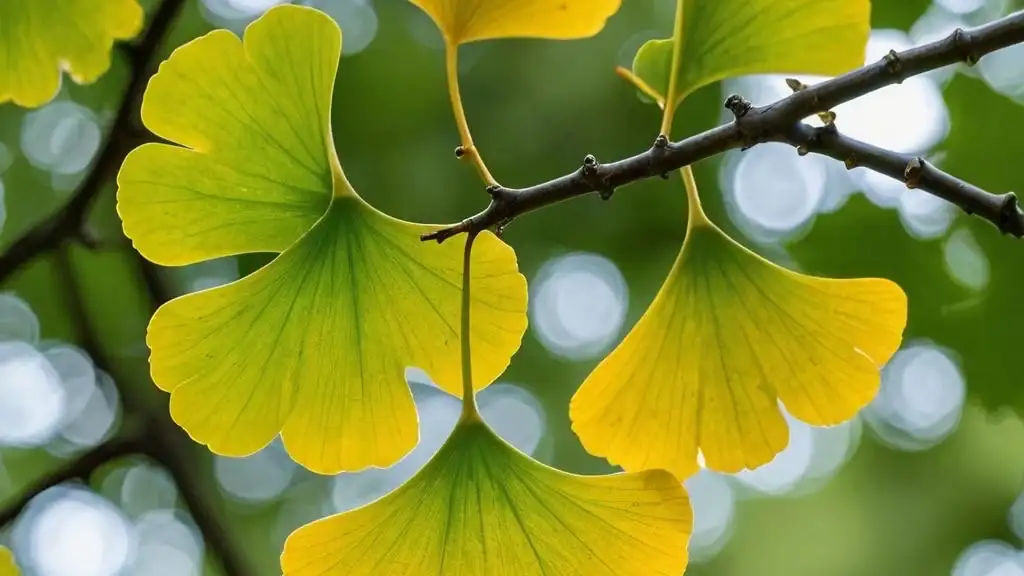
Ginkgo (Ginkgo biloba), with its distinctive fan-shaped leaves and ancient lineage, is often called a “living fossil”—it has survived virtually unchanged for over 200 million years. Revered in traditional Chinese medicine and now cherished worldwide, ginkgo is celebrated for its ability to support circulation, particularly to the brain.

Herbalists and researchers alike praise ginkgo for its gentle power to enhance memory, sharpen mental clarity, and protect the mind from the effects of aging and stress. Many people find that incorporating ginkgo into their daily routine helps lift mental fog and sustain focus, especially during busy or stressful seasons. 

A World of Herbal Allies

Lion’s Mane, Ginkgo, and Gotu Kola are just a few members of a vast family of herbal nootropics. Bacopa (Bacopa monnieri), another Ayurvedic staple, is renowned for supporting learning and memory. Rosemary, once worn as a crown by Greek scholars, is still cherished for its ability to stimulate the mind and uplift the spirit. Even humble nettle, often overlooked, can support circulation, mental clarity, and overall vitality.

A Gentle Invitation

The path of herbal nootropics is not a race but a relationship. These plants and fungi work best when paired with nourishing food, mindful rest, and a reverence for nature’s rhythms. They invite us to slow down, listen, and remember that wisdom is a process, not a destination.

Work with herbal nootropics that nurture both mind and spirit, one thoughtful cup of tea or tincture at a time.

Interested in learning more? Here is the Beginner’s Guide to Nootropics 

A plant per day in Costa Rica

Selected medicines of the jungle for common ailments

It is not easy to pick just a few medicinal plants from the many in Costa Rica’s biosphere. The knowledge of jungle remedies is very strong in rural areas, and even botanists are puzzled by new species discovered every year. I love, use, and know well some versatile ethnobotanicals in my practice. These plants are very versatile, as they don’t serve only one purpose; they may be food and medicine too. Some of my favorite species are also used as a sacrament or connected to rituals. When planning a new medicinal garden, I always want to include them. You’ll see why.

(more…)

Globalization and Medicinal Plants: The Double-Edged Sword

We live in ambiguous times. The world, once full of unreachable corners and mysterious landscapes, now seems to fit in the palm of our hand. Rare delicacies, extravagant spices, and miraculous herbs from every corner of the globe are suddenly accessible at the local market or with a click online. Globalization has made the world smaller, our plates and apothecaries richer—and yet, it has also made things infinitely more complex.

(more…)

Why Are Symbolic Healing Rituals So Often Demonized?

The Stigma Around Symbolic Healing Rituals

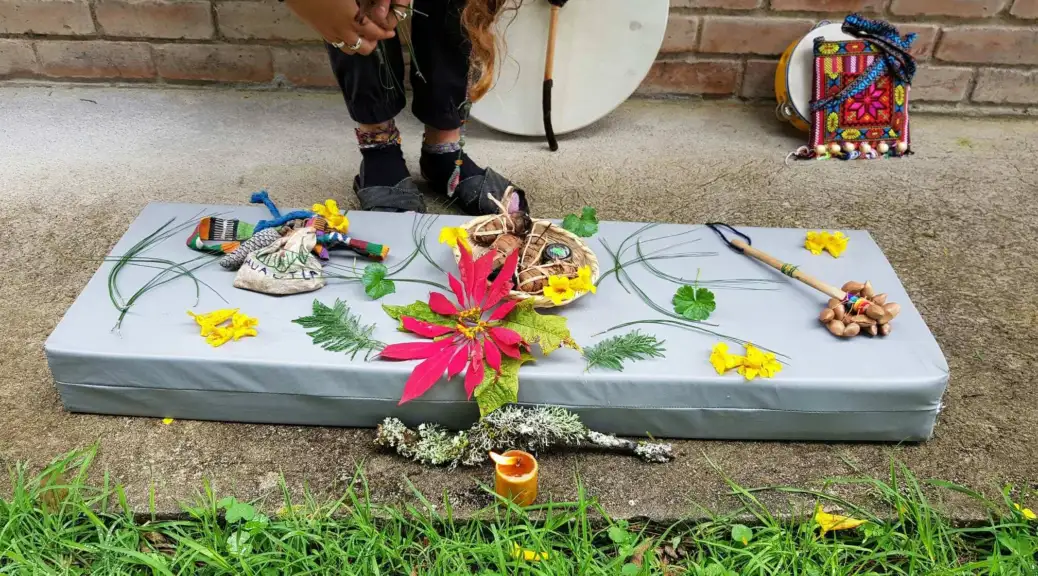
The candle casts vivid light all around, while the moon cannot caress the forest’s darkness. A very young boy carries magic stones, myrrh, and a bundle of incense sticks. I cannot pronounce his name, but it sounds like an ancient lullaby. The primordial drum vibrates with giant, clear notes. So, the old man with the majestic voice whispers his song.

“Why did he throw the seeds into the fire, then?” a voice next to me asks.

After joining many ceremonies, I asked myself the same one day. What if there were no sacred gestures? What makes the difference?

“Rituals are calls for healing to occur. They evoke the collective imaginary to present a significant event. If you rest in faith and stillness, magic appears without stress,” I finally reply.

ANCIENT VS MODERN RITUALS

There is a verge point where ancient healing systems collide together—from Ayurveda to Chinese traditions to Shamanism. They all share symbolism and visions of wisdom, a hidden language of the psychological matrix that can materialize atavistic fears and metaphors of existence. This language is primordial to the balance of the subconscious mind and the delicate rational being. As our recent evolution suggests, the intuitive, non-verbal sensitivity of the right hemisphere has been obscured by the active development of the left, analytical, surgical hemisphere.

This modern gap reflects the imbalance in intracortical manifestation that marks the discrepancies in social life. The miscommunication of our two brains emerges as a rudimentary conflict, a lack of compassion and acceptance for the supernatural.

Symbolism potentially connects us to a flourishing, multidimensional system of knowledge in which the poetic, subjective, abstract object can amplify perception rather than reduce it to a flat, precise concept. We have all been trained to think and communicate through a universal, delimited set of symbols or alphabetical letters, reduced to objective images to categorize, simplify, and homogenize. It is obviously convenient for us to keep fluid, understandable interactions; it is the common field, the shared reality to sustain.

But the image, the form, and the symbol are there before us, before the mind. They are available to expand a whole complex of intuitive notions or states of being that cannot be described or defined, only experienced.

So, why does modern society demonize the symbolic?

Many rituals involve religious practice and beliefs; entirely or partially, they are part of a culture or closely related to a collective mind acting in a sacred space that can eventually be dislocated into a spaceless, timeless realm. This is the opposite of a factual world, the one that the rational man looks for.

It seems like we are sabotaging this beautiful connection, actively disarming the state of magic.

Losing this connection means losing the continuum of our evolutionary path, especially the integrative points. Beneath our shiny neocortex, the two earlier forms of the reptilian brain and limbic system are still performing as they did in older times. These three components should work cooperatively to reach a natural homeostasis. Here comes the disruption: the rational being pulling away from its very roots.

Carl Sagan, in his poetic cosmology, believes that essentially human culture is the function of the ‘corpus callosum’—the brain’s bridge between the left and right hemispheres—and states that “…the hallmark of a successful, long-lived civilization may be the ability to achieve a lasting peace among the several brain components.”

So, how can we make this connection possible?

Sometimes symbols appear in obvious forms; sometimes we need to interpret them. Ancient gestures in India are known as Mudras, literally channeling energy through hand movements. Prayer, or Namaskara Mudra, is a gesture performed by joining the two hands, an enduring symbol of kindness and peace, borrowed through the ages from cultures around the world. In this Mudra, the two hands are pressed together and held near the heart with the head gently bowed as one says, “Namaste,” meaning ‘the divine in me honors the divine in you’. In simple terms, it is accepted as a humble greeting from the heart and reciprocated accordingly. Widely recognized across Eastern countries as a symbol of devotion, it evokes a ceremonial prayer of thanks without begging.

Other iconographic symbols date back to the dawn of humanity, emerging from the darkness of caves or hidden in temples. Collectively known as archaic art, they represent sacred animals, the sun and moon, ideograms, and stylized shapes, reminding us of the clever emphasis on a distinctive characteristic or archetype. Also note the sophisticated sacred geometry of ‘the flower of life’—a harmonious shape composed of multiple evenly spaced, overlapping circles arranged in a flower-like pattern. The flower is believed to contain a type of Akashic Record (mystical knowledge embedded in a non-physical plane) of basic information about all living things. It is the visual expression of the connections of life that run through all sentient beings. The symbol itself evokes a vibrant, fundamental perfection and has been used in multiple settings and different ages to recall the holy forces of creation.

Believe it or not, calling the symbol catalyzes this ancient connection. Not just in the dream world, but in everyday life. We are still burning the witch inside to disintegrate this living, strong creature called primordial consciousness. In this light, a sacred ritual celebrates the majestic forces we perceived at the very beginning: the rise of the gods with their magical arsenal of healing. This is the first step to illuminate the obscure cave of subconscious production.

SYMBOLS AS A COLLECTIVE EXPERIENCE

In the end, symbolic healing rituals are far more than mere superstition or cultural eccentricity—they are living threads in the fabric of our collective psyche, bridging the rational and the intuitive, the ancient and the present. By dismissing or demonizing these practices, society risks severing a vital connection to the deeper layers of meaning, creativity, and healing that dwell within us all.

Embracing symbols and ceremony honors the full spectrum of human experience, creating space for mystery, reverence, and transformation. If we can rekindle respect for the symbolic, we may find ourselves not only more balanced individually, but more compassionate and harmonious as a society, able to weave together the many strands of our shared humanity.