Category Archives: ancient traditions

Mayan Medicine: the neglected art

“Mayan cosmovision is a value system that interprets and connects the world, life, things and time…explaining how to size Universe and nature, whilst performing the art of healing”Many people are familiar with Traditional Chinese Medicine or Ayurveda, but few know ancient Mayan medicine. Why is it so? Mayan Medicine is a millennia-old tradition, transmitted orally for so many generations despite colonization, civil wars, and post-colonial religious brainwashing. It still has a strong core, tough, resilient, and palpable.

Yet it is on the verge of extinction, even in the rural areas of Guatemala where it was once constantly practiced.  Mayan elders now struggle to teach their medicine to young people who feel a strong pull to leave the countryside or the forest, seeking city life, more opportunities, or a fresh escape. Moreover, books and documents reporting this ancient knowledge are very scarce. This lack of information is affecting the vitality of these powerful traditions, and elders struggle to keep them pure and free from contamination by modern revisitations.

MAYAN THERAPIES AT A GLANCE

The two best-known Mayan therapies are ancient reflexology techniques called the Neurosacral and Abdominal Massage. Beyond physical manipulation, these therapies engage the emotional sphere and regenerate the Ch’ulel, or vital universal force. You must learn and integrate the teachings of Mayan nahuales and Mayan cosmology before applying them; for this reason, the cosmovision can’t be detached from the practice.

Even if most of the information is not structured, Mayan Medicine is an incredibly valuable and effective holistic practice, especially focused on the comprehension of the self and one’s role in the cosmos. The wide variety of plants, rituals, minerals, and shamanic elements in use makes it a remarkable and tailored experience, far beyond the sterile biomedical approach.

The realm of dreams, the subconscious mind, the elements in nature, and the inner journey are all essential blocks of a fascinating system that forces the apprentice into perpetual investigation and dynamic social sharing.

Healers known as aj-men or tatas possessed deep knowledge of local flora, using hundreds of plants for everything from digestive ailments to wound care and spiritual protection. Remedies often included plants like copal (used as incense for cleansing and offerings), cacao (cherished for its nourishing and mood-lifting properties), and chaya (sometimes called Mayan spinach, valued for its nutritional and tonic effects). The Maya also relied on powerful plants such as balché, a sacred tree whose bark they fermented into a ceremonial beverage, and ceiba, the majestic tree regarded as the axis of the world and central to both cosmology and healing.

Mayan medicine was never just about physical health—it was a holistic practice interwoven with ritual and cosmology. Healing ceremonies typically involved prayers, offerings, and the burning of sacred herbs to communicate with ancestors and deities. Ritual steam baths known as temazcal incorporated aromatic plants to purify the body and spirit, while divination and dreamwork helped diagnose illness and guide treatment. In this worldview, illness could arise from spiritual imbalance or disharmony within the community or the land itself, so healing often meant restoring balance in all realms. Today, the legacy of Mayan plant medicine lives on, inspiring herbalists and healers to honor the interconnectedness of body, spirit, and the natural world

HOW TO PRESERVE THE MAYAN WISDOM?

To keep these traditions alive, we must pass on the knowledge. Having studied with a few elders from the Alta Verapaz and Coastal regions of Guatemala and Belize, I reflect today on the continuity of this heritage. All of my teachers died recently, and with them a vast amount of wisdom, kindness, and sarcasm. Later, I decided to publish my field and training notes and polish everything into two books to keep the flame alive. Many years after the first publication, I still feel grateful and blessed for this opportunity.  How precious was their contribution in shaping an oral tradition into a more tangible form.

Bantiox.

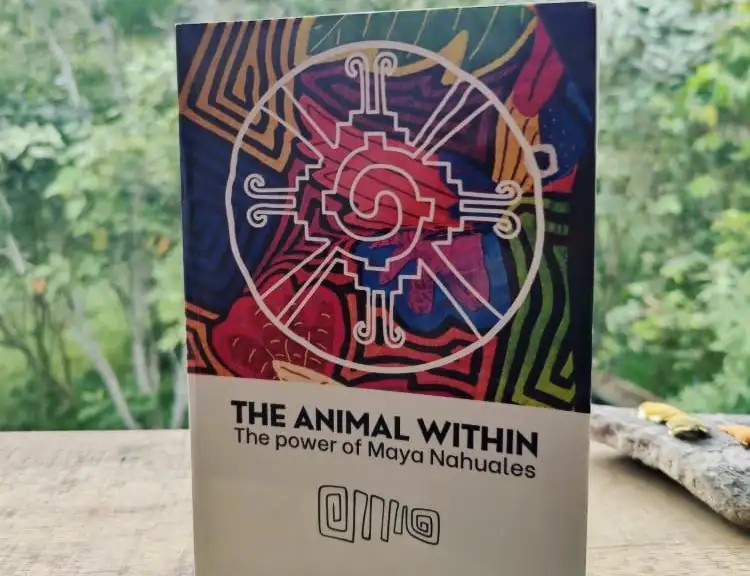
If you want to explore the Maya Nahuales and Plants, check out my author’s page HERE

Learn more about our  MAYAN MEDICINE COURSE
 

Why Are Symbolic Healing Rituals So Often Demonized?

The Stigma Around Symbolic Healing Rituals

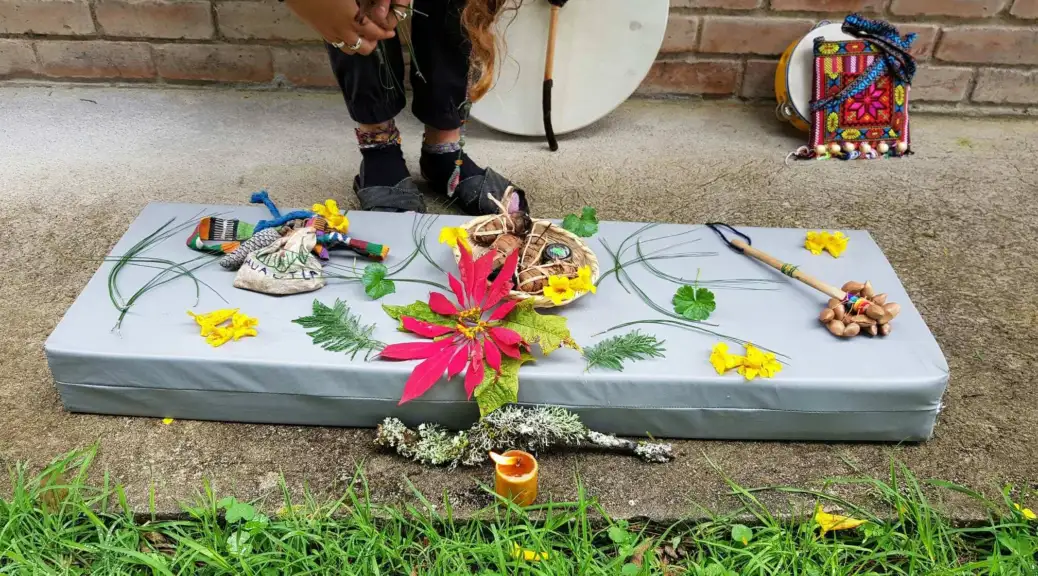
The candle casts vivid light all around, while the moon cannot caress the forest’s darkness. A very young boy carries magic stones, myrrh, and a bundle of incense sticks. I cannot pronounce his name, but it sounds like an ancient lullaby. The primordial drum vibrates with giant, clear notes. So, the old man with the majestic voice whispers his song.

“Why did he throw the seeds into the fire, then?” a voice next to me asks.

After joining many ceremonies, I asked myself the same one day. What if there were no sacred gestures? What makes the difference?

“Rituals are calls for healing to occur. They evoke the collective imaginary to present a significant event. If you rest in faith and stillness, magic appears without stress,” I finally reply.

ANCIENT VS MODERN RITUALS

There is a verge point where ancient healing systems collide together—from Ayurveda to Chinese traditions to Shamanism. They all share symbolism and visions of wisdom, a hidden language of the psychological matrix that can materialize atavistic fears and metaphors of existence. This language is primordial to the balance of the subconscious mind and the delicate rational being. As our recent evolution suggests, the intuitive, non-verbal sensitivity of the right hemisphere has been obscured by the active development of the left, analytical, surgical hemisphere.

This modern gap reflects the imbalance in intracortical manifestation that marks the discrepancies in social life. The miscommunication of our two brains emerges as a rudimentary conflict, a lack of compassion and acceptance for the supernatural.

Symbolism potentially connects us to a flourishing, multidimensional system of knowledge in which the poetic, subjective, abstract object can amplify perception rather than reduce it to a flat, precise concept. We have all been trained to think and communicate through a universal, delimited set of symbols or alphabetical letters, reduced to objective images to categorize, simplify, and homogenize. It is obviously convenient for us to keep fluid, understandable interactions; it is the common field, the shared reality to sustain.

But the image, the form, and the symbol are there before us, before the mind. They are available to expand a whole complex of intuitive notions or states of being that cannot be described or defined, only experienced.

So, why does modern society demonize the symbolic?

Many rituals involve religious practice and beliefs; entirely or partially, they are part of a culture or closely related to a collective mind acting in a sacred space that can eventually be dislocated into a spaceless, timeless realm. This is the opposite of a factual world, the one that the rational man looks for.

It seems like we are sabotaging this beautiful connection, actively disarming the state of magic.

Losing this connection means losing the continuum of our evolutionary path, especially the integrative points. Beneath our shiny neocortex, the two earlier forms of the reptilian brain and limbic system are still performing as they did in older times. These three components should work cooperatively to reach a natural homeostasis. Here comes the disruption: the rational being pulling away from its very roots.

Carl Sagan, in his poetic cosmology, believes that essentially human culture is the function of the ‘corpus callosum’—the brain’s bridge between the left and right hemispheres—and states that “…the hallmark of a successful, long-lived civilization may be the ability to achieve a lasting peace among the several brain components.”

So, how can we make this connection possible?

Sometimes symbols appear in obvious forms; sometimes we need to interpret them. Ancient gestures in India are known as Mudras, literally channeling energy through hand movements. Prayer, or Namaskara Mudra, is a gesture performed by joining the two hands, an enduring symbol of kindness and peace, borrowed through the ages from cultures around the world. In this Mudra, the two hands are pressed together and held near the heart with the head gently bowed as one says, “Namaste,” meaning ‘the divine in me honors the divine in you’. In simple terms, it is accepted as a humble greeting from the heart and reciprocated accordingly. Widely recognized across Eastern countries as a symbol of devotion, it evokes a ceremonial prayer of thanks without begging.

Other iconographic symbols date back to the dawn of humanity, emerging from the darkness of caves or hidden in temples. Collectively known as archaic art, they represent sacred animals, the sun and moon, ideograms, and stylized shapes, reminding us of the clever emphasis on a distinctive characteristic or archetype. Also note the sophisticated sacred geometry of ‘the flower of life’—a harmonious shape composed of multiple evenly spaced, overlapping circles arranged in a flower-like pattern. The flower is believed to contain a type of Akashic Record (mystical knowledge embedded in a non-physical plane) of basic information about all living things. It is the visual expression of the connections of life that run through all sentient beings. The symbol itself evokes a vibrant, fundamental perfection and has been used in multiple settings and different ages to recall the holy forces of creation.

Believe it or not, calling the symbol catalyzes this ancient connection. Not just in the dream world, but in everyday life. We are still burning the witch inside to disintegrate this living, strong creature called primordial consciousness. In this light, a sacred ritual celebrates the majestic forces we perceived at the very beginning: the rise of the gods with their magical arsenal of healing. This is the first step to illuminate the obscure cave of subconscious production.

SYMBOLS AS A COLLECTIVE EXPERIENCE

In the end, symbolic healing rituals are far more than mere superstition or cultural eccentricity—they are living threads in the fabric of our collective psyche, bridging the rational and the intuitive, the ancient and the present. By dismissing or demonizing these practices, society risks severing a vital connection to the deeper layers of meaning, creativity, and healing that dwell within us all.

Embracing symbols and ceremony honors the full spectrum of human experience, creating space for mystery, reverence, and transformation. If we can rekindle respect for the symbolic, we may find ourselves not only more balanced individually, but more compassionate and harmonious as a society, able to weave together the many strands of our shared humanity.