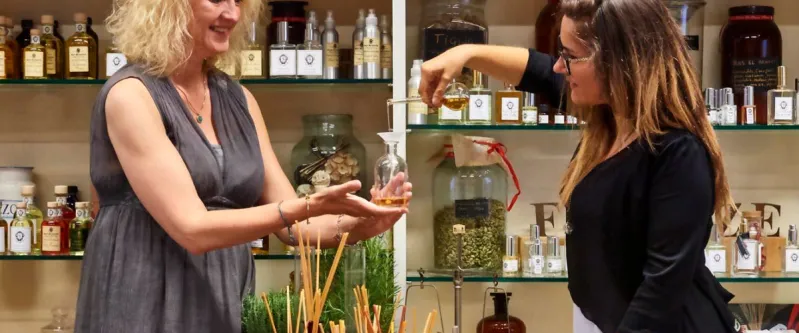
Something ancient and magical lives in the world of scent—a single whiff of a flower, resin, or spice can transport us to distant memories or exotic lands. For herbalists, perfumers, and incense makers, working with aromatic plants is a dance between chemistry and artistry, tradition and innovation. If you’ve ever wondered what sets essential oils apart from absolutes and concretes, or why some incense lingers in the air long after it burns, welcome to the fragrant heart of botanical alchemy.
I was born in Florence, a city steeped in the fragrances of history, where the art of alchemy and the secrets of perfumery have been woven into daily life for centuries. Growing up amidst Renaissance palaces, bustling markets, and ancient apothecaries, I was drawn from a young age to the old-world craft of extracting scent and meaning from the natural world. The traditions of Florentine alchemists and herbalists—blending resins, flowers, and roots into potions and perfumes—became part of my own story, inspiring a lifelong journey into the mysteries of aroma and the healing power of plants.
Essential Oils: The Volatile Soul of Plants
Essential oils are perhaps the best-known aromatic extracts. They are highly concentrated, volatile compounds produced by steam distillation or cold pressing. They come from plant materials like flowers, leaves, wood, and citrus peels. Think of lavender, peppermint, or frankincense oil—each is captured from the living plant, carrying the essence of its aroma, medicinal virtues, and energetic signature.
Essential oils are prized for their purity and versatility. They’re used in aromatherapy, natural perfumery, and medicine, often requiring only a drop or two to infuse a blend with vibrant scent. However, because they consist only of the lightest, most volatile molecules, some nuanced, heavier notes—especially from delicate flowers—are lost in the process.
Concretes: Capturing the Full Bouquet
Concretes are a different kind of extract, often used in high-end perfumery. They’re created by soaking plant material in a non-polar solvent (traditionally hexane) to dissolve all aromatic compounds, waxes, and pigments. Once the solvent is evaporated, what remains is a soft, waxy substance: the concrete.
Concretes capture a broader spectrum of fragrance, including both the volatile and non-volatile constituents. This means a richer, more rounded scent profile—especially important when working with fragile flowers like jasmine, rose, or tuberose. While not usually used directly on the skin, concretes are a vital step in producing the most exquisite aromas.
Absolutes: The Perfumer’s Treasure
To create an absolute, the concrete undergoes further processing—usually with alcohol—to separate the aromatic molecules from waxes and other non-aromatic substances. The result is a highly concentrated, viscous liquid: the absolute.
Absolutes are the gold standard in natural perfumery, prized for their intense, true-to-life scent and their ability to evoke the plant’s living soul. Jasmine absolute, rose absolute, and oakmoss absolute are just a few examples. Because they contain a broader spectrum of aromatic compounds than essential oils, absolutes offer depth, complexity, and staying power in perfume blends.
The Art of Perfumery: Balancing Top, Heart, and Base Notes
Natural perfumery is about more than just combining beautiful scents—it’s an art that weaves together volatile top notes, lush heart notes, and grounding base notes. Essential oils, absolutes, and sometimes tinctures or resins each play a role. Top notes capture your attention, heart or middle notes unfold with character, and base notes linger, anchoring the composition.
Incense and the Magic of Fixatives
In incense making, as in perfumery, the challenge is to create a balanced aroma that endures. This is where fixatives come in: substances that slow the evaporation of the most fleeting scents and lend depth and longevity to the blend.
Traditional incense fixatives include resins like benzoin, labdanum, and frankincense, as well as powders such as sandalwood, orris root, and makko. These materials hold and “fix” the volatile top notes, allowing the incense to reveal its story gradually, each layer unfolding as the smoke drifts through the air.
A Living Art
Whether you’re crafting a personal perfume, blending essential oils for meditation, or rolling incense sticks for ritual, understanding these aromatic substances opens a world of creative possibilities. Each extract—essential oil, concrete, or absolute—offers its own gifts and challenges, and skillful use of fixatives bridges fragrance and memory, ritual and reverie.
In the end, the alchemy of scent is more than chemistry—it’s a living art, a dialogue between memory and imagination, earth and spirit. Within the ancient traditions, perfumers and alchemists spoke of the “sulfur soul” of the plant—the fiery spark, the animating essence that brings fragrance to life and infuses every blend with character and vitality. Each drop of oil and every carefully crafted absolute becomes a vessel for this sulfur, carrying not just aroma but the plant’s transformative power.